

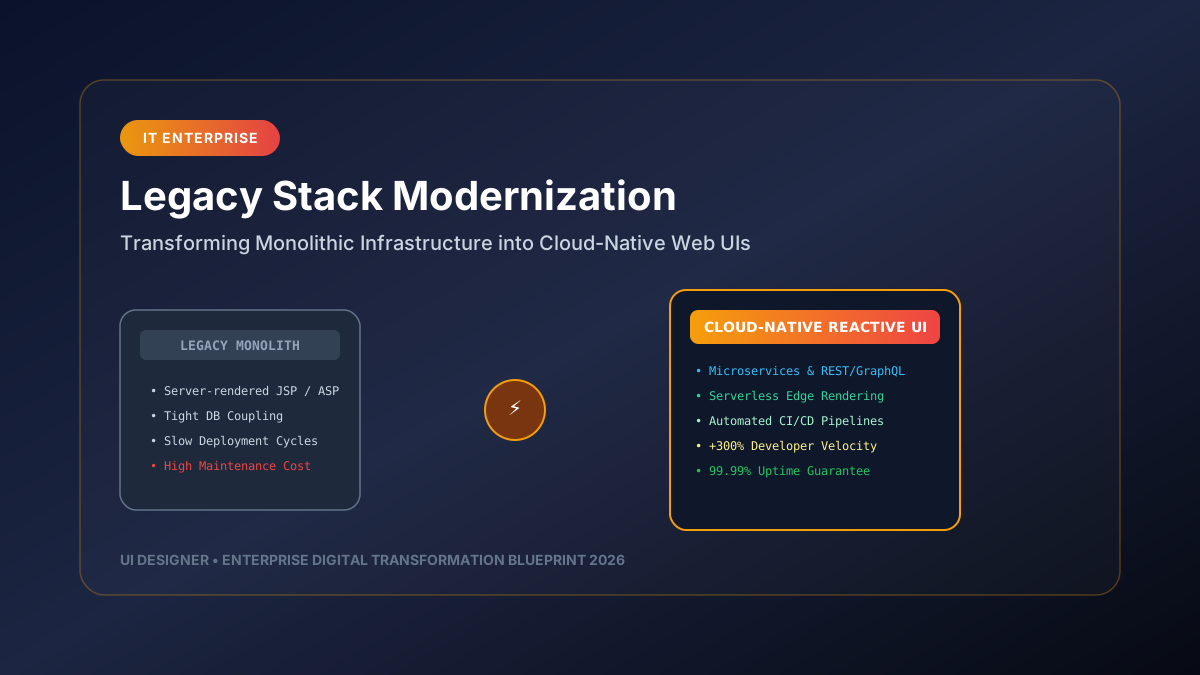
Modernizing legacy tech stacks into cloud-native web UIs is one of the most critical engineering initiatives an enterprise can undertake in 2026. Legacy software systems—often built on monolithic server-side rendering, tightly coupled databases, and outdated framework architectures—frequently slow down product velocity, inflate infrastructure expenditures, and fail to deliver the sleek, responsive experiences modern users expect.
This comprehensive engineering playbook outlines the step-by-step technical strategy, architectural blueprints, risk mitigation frameworks, and real-world implementation techniques required to transform legacy enterprise software into scalable, cloud-native digital products.
---
1. The Anatomy of Legacy Monolithic Technical Debt
To successfully modernize a legacy application, engineering leaders must first diagnose the structural anti-patterns that create friction in enterprise legacy systems.
┌─────────────────────────────────────────────────────────────────────────────┐
│                       LEGACY MONOLITHIC ARCHITECTURE                        │
├─────────────────────────────────────────────────────────────────────────────┤
│                                                                             │
│  ┌───────────────────────────────────────────────────────────────────────┐  │
│  │ UNIFIED MONOLITHIC APPLICATION CONTAINER                              │  │
│  │                                                                       │  │
│  │  • Server-Side Rendered Views (JSP / ASP.NET / PHP monolith)          │  │
│  │  • Tight Business Logic & Domain Coupling                             │  │
│  │  • Direct Database Queries in Presentation Layer                      │  │
│  │  • Synchronous In-Memory Session Storage                              │  │
│  └───────────────────────────────────────────────────────────────────────┘  │
│                                      │                                      │
│                                      ▼                                      │
│  ┌───────────────────────────────────────────────────────────────────────┐  │
│  │ SINGLE CONGESTED RELATIONAL DATABASE (High Contention & Locking)      │  │
│  └───────────────────────────────────────────────────────────────────────┘  │
└─────────────────────────────────────────────────────────────────────────────┘
Primary Symptoms of Monolithic Stagnation:
- **Coupled Release Cycles**: A bug fix in a minor reporting module requires rebuilding and redeploying the entire multi-gigabyte application binary.
- **Brittle Handoffs & Tribal Knowledge**: Documentation is sparse or outdated; changing a CSS selector or database schema risks breaking unrelated enterprise workflows.
- **High Infrastructure Overhead**: Scaling the application requires provisioning beefy, over-provisioned virtual machines rather than auto-scaling lightweight edge functions.
- **Sub-optimal Developer Experience**: Onboarding new frontend engineers requires setting up heavy local server environments, taking days or weeks instead of hours.
---
2. The Strangler Fig Pattern: Risk-Free Incremental Migration
Attempting a total "big bang" rewrite of a complex enterprise system is notorious for project overruns and high failure rates. The **Strangler Fig Pattern** incrementally replaces legacy application capabilities with modern micro-services and micro-frontends behind an intelligent API Gateway.
┌─────────────────────────────────────────────────────────────────────────────┐
│                    STRANGLER FIG MIGRATION FLOW                             │
├─────────────────────────────────────────────────────────────────────────────┤
│                                                                             │
│                   ┌──────────────────────────────────────┐                  │
│                   │      INCOMING CLIENT REQUESTS        │                  │
│                   └──────────────────┬───────────────────┘                  │
│                                      │                                      │
│                                      ▼                                      │
│                   ┌──────────────────────────────────────┐                  │
│                   │    API GATEWAY / REVERSE PROXY       │                  │
│                   │    (Path Routing & Traffic Split)    │                  │
│                   └──────────┬─────────────────┬─────────┘                  │
│                              │                 │                            │
│                 /legacy/*    │                 │  /api/v2/* & /app/*        │
│                              ▼                 ▼                            │
│                   ┌────────────────────┐   ┌───────────────────────────┐    │
│                   │ LEGACY MONOLITH    │   │ CLOUD-NATIVE MICRO-FRONTEND│    │
│                   │ (Gradually Shrinks)│   │ (Modern Next/Nuxt & React) │    │
│                   └────────────────────┘   └───────────────────────────┘    │
│                                                                             │
└─────────────────────────────────────────────────────────────────────────────┘
Phase-by-Phase Execution:
- **Phase 1: Perimeter Interception**: Deploy an API Gateway (e.g., NGINX, Traefik, or Cloudflare Workers) in front of the legacy application to proxy 100% of incoming web traffic.
- **Phase 2: Route Extraction**: Identify high-value, self-contained domain routes (e.g., User Authentication, Reporting, Billing) and construct new micro-frontend modules.
- **Phase 3: Parallel Traffic Shadowing**: Route a small percentage of production requests to the new cloud-native micro-frontends to validate performance, metrics, and data integrity.
- **Phase 4: Full Cutover & Legacy Decommissioning**: Gradually increase traffic until the old monolithic route receives zero traffic, allowing the legacy module to be safely unmounted and decommissioned.
---
3. Decoupling the Presentation Layer with API Gateways & Middleware
Modern reactive web UIs require fast, structured data endpoints. Legacy databases must be abstracted behind lightweight API middleware layers using OpenAPI, GraphQL, or RESTful microservices.
Node.js / TypeScript API Gateway Adapter Example:
import express, { Request, Response } from 'express';
import { createProxyMiddleware } from 'http-proxy-middleware';
const app = express();
// Route modern client requests to cloud-native microservices app.use('/api/v2/analytics', createProxyMiddleware({ target: 'https://analytics-service.internal.cloud', changeOrigin: true, pathRewrite: { '^/api/v2/analytics': '' } }));
// Route legacy traffic back to the legacy monolith container app.use('/', createProxyMiddleware({ target: 'https://legacy-monolith.internal.corp', changeOrigin: true }));
app.listen(8080, () => { console.log('API Routing Gateway operational on port 8080'); });
Stateless Token-Based Authentication Migration
Transitioning from monolithic server-side session cookies (`JSESSIONID`, `ASP.NET_SessionId`) to stateless **JSON Web Tokens (JWT)** or **OAuth2 / OIDC** allows micro-frontends to run across separate subdomains and global edge CDN nodes while sharing unified user identity contexts.
---
4. Edge Rendering & Global Content Delivery Architecture
To achieve sub-second load times globally, enterprise frontend applications must leverage modern rendering patterns supported by platforms like Vercel, Netlify, and Cloudflare Pages.
┌─────────────────────────────────────────────────────────────────────────────┐
│                    CLOUD-NATIVE EDGE UI ARCHITECTURE                        │
├─────────────────────────────────────────────────────────────────────────────┤
│                                                                             │
│   GLOBAL CDN EDGE NETWORKS (Cloudflare / Fastly / AWS CloudFront)           │
│   ├── Static Assets & Skeletons cached at 300+ Edge POP locations           │
│   ├── Server-Side Rendering (SSR) executes closest to the end user          │
│   └── Incremental Static Regeneration (ISR) updates cached pages silently    │
│                                                                             │
└─────────────────────────────────────────────────────────────────────────────┘
Choosing the Right Rendering Mode:
- **Server-Side Rendering (SSR)**: Ideal for dynamic dashboard pages with personalized data (e.g., Executive Analytics).
- **Static Site Generation (SSG)**: Perfect for documentation, marketing pages, and public content.
- **Incremental Static Regeneration (ISR)**: Best for massive catalog pages; updates static pages in the background without requiring full application builds.
---
5. Automated CI/CD Pipelines & Infrastructure as Code (IaC)
A modernized tech stack relies on automated testing, continuous integration, and declarative infrastructure management.
Example GitHub Actions CI/CD Pipeline (`.github/workflows/deploy.yml`):
name: Enterprise Web UI Deployment Pipelineon: push: branches: [ main ] pull_request: branches: [ main ]
jobs: validate-and-deploy: runs-on: ubuntu-latest steps:
uses: actions/checkout@v4
- name: Checkout Codebase
uses: actions/checkout@v4 with: node-version: '20' cache: 'npm'
- name: Setup Node.js Environment
run: npm ci
- name: Install Dependencies
run: npm run test
- name: Execute Automated Unit & Integration Tests
run: npm run lint && npm run audit:a11y
- name: Run Accessibility (WCAG 2.2) & Lint Audits
run: npm run build
- name: Build Production Assets
if: github.ref == 'refs/heads/main' env: VERCEL_TOKEN: ${{ secrets.VERCEL_TOKEN }} run: npx vercel --prod --token=$VERCEL_TOKEN
- name: Deploy to Cloud Production Edge
---
6. Enterprise Risk Mitigation & Zero-Downtime Rollout Strategy
- **Feature Flags**: Wrap new UI features inside dynamic feature flags (e.g., LaunchDarkly, Flagsmith). Turn features on or off instantaneously for specific user cohorts without code deployments.
- **Canary Releases**: Direct 5% of enterprise traffic to the new cloud UI, monitor error logging dashboards (Sentry, Datadog), and incrementally ramp to 100%.
- **Database Schema Versioning**: Ensure database updates are backward-compatible so legacy code and modern microservices can read and write simultaneously during migration windows.
---
7. Executive ROI & Summary Matrix
| Metric | Legacy Monolithic Stack | Modern Cloud-Native Web UI | Business Impact | | :--- | :--- | :--- | :--- | | **Deployment Frequency** | Monthly / Quarterly | Multiple times per day | +400% Feature Delivery Speed | | **Global Page Load (LCP)** | 3.8s – 6.5s | 0.6s – 1.1s | +35% User Engagement & Conversion | | **Infrastructure Costs** | Fixed high server overhead | Elastic Serverless Pay-as-you-go | 50%–70% Hosting Cost Savings | | **Developer Onboarding** | 2–3 weeks | < 1 day | Drastic reduction in engineering churn |
Modernizing legacy applications is an investment that yields compounding dividends in developer velocity, application resilience, and customer satisfaction. By following the Strangler Fig pattern and embracing cloud-native web architectures, enterprise IT organizations secure their competitive advantage for the decade ahead.