

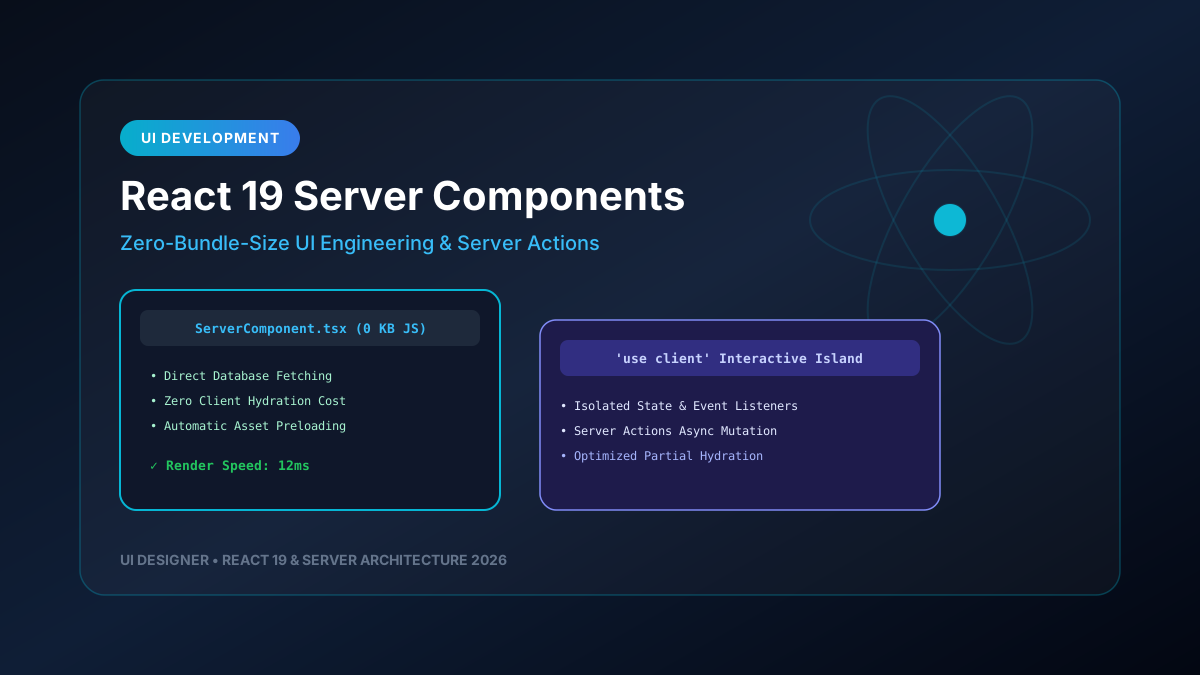
React 19 represents a monumental evolution in frontend web engineering. By making **React Server Components (RSC)** and **Server Actions** standard primitives, React allows developers to build high-performance web UIs with zero client-side JavaScript bundle overhead for data-heavy components.
---
1. React Server Components (RSC) vs Client Components
In traditional React, every component added to the tree ships JavaScript bytes to the browser, requiring client-side hydration. React Server Components execute exclusively on the server, outputting light HTML streams directly to the DOM.
┌─────────────────────────────────────────────────────────────────────────────┐
│                      REACT 19 COMPOSITION MODEL                             │
├─────────────────────────────────────────────────────────────────────────────┤
│                                                                             │
│  SERVER COMPONENTS (Default)           CLIENT COMPONENTS ('use client')     │
│  • Fetch data directly from DB          • Interactive click & state handlers │
│  • Zero client bundle size              • Access browser APIs (localStorage) │
│  • Keep secrets on backend              • Lightweight partial hydration      │
│                                                                             │
└─────────────────────────────────────────────────────────────────────────────┘
---
2. Zero-Bundle-Size Server Component Data Fetching
// ProductList.tsx (Server Component - No 'use client' directive)
import { db } from '@/lib/database';
export default async function ProductList() { // Fetch data directly inside component body with zero API boilerplate const products = await db.products.findMany({ take: 10 });
return (
{product.name}
${product.price}
---
3. Asynchronous Form Mutations with React 19 Server Actions
React 19 introduces native `useActionState` and `useFormStatus` hooks, eliminating manual `fetch()` calls and loading state boilerplate.
// actions.ts (Server Action)
'use server';
import { revalidatePath } from 'next/cache';
export async function updateProfile(prevState: any, formData: FormData) { const username = formData.get('username') as string; await db.users.update({ where: { id: 'usr_123' }, data: { username } });
revalidatePath('/profile'); return { success: true, message: 'Profile updated successfully!' }; }
// ProfileForm.tsx (Client Component) 'use client';
import { useActionState } from 'react'; import { updateProfile } from './actions';
export function ProfileForm() { const [state, formAction, isPending] = useActionState(updateProfile, null);
return (
); }---
4. Architectural Benefits for Enterprise Applications
- **Drastic Reduction in TTI (Time to Interactive)**: Shipping HTML streams instead of massive JS bundles drastically lowers CPU processing on mobile devices.
- **Improved Security**: Database credentials and internal API secrets remain securely on the server.
- **Automatic Asset Preloading**: React 19 automatically preloads stylesheets and scripts when navigating between routes.
React 19 Server Components provide the ideal balance between full-stack capability and blazing-fast user interfaces.