

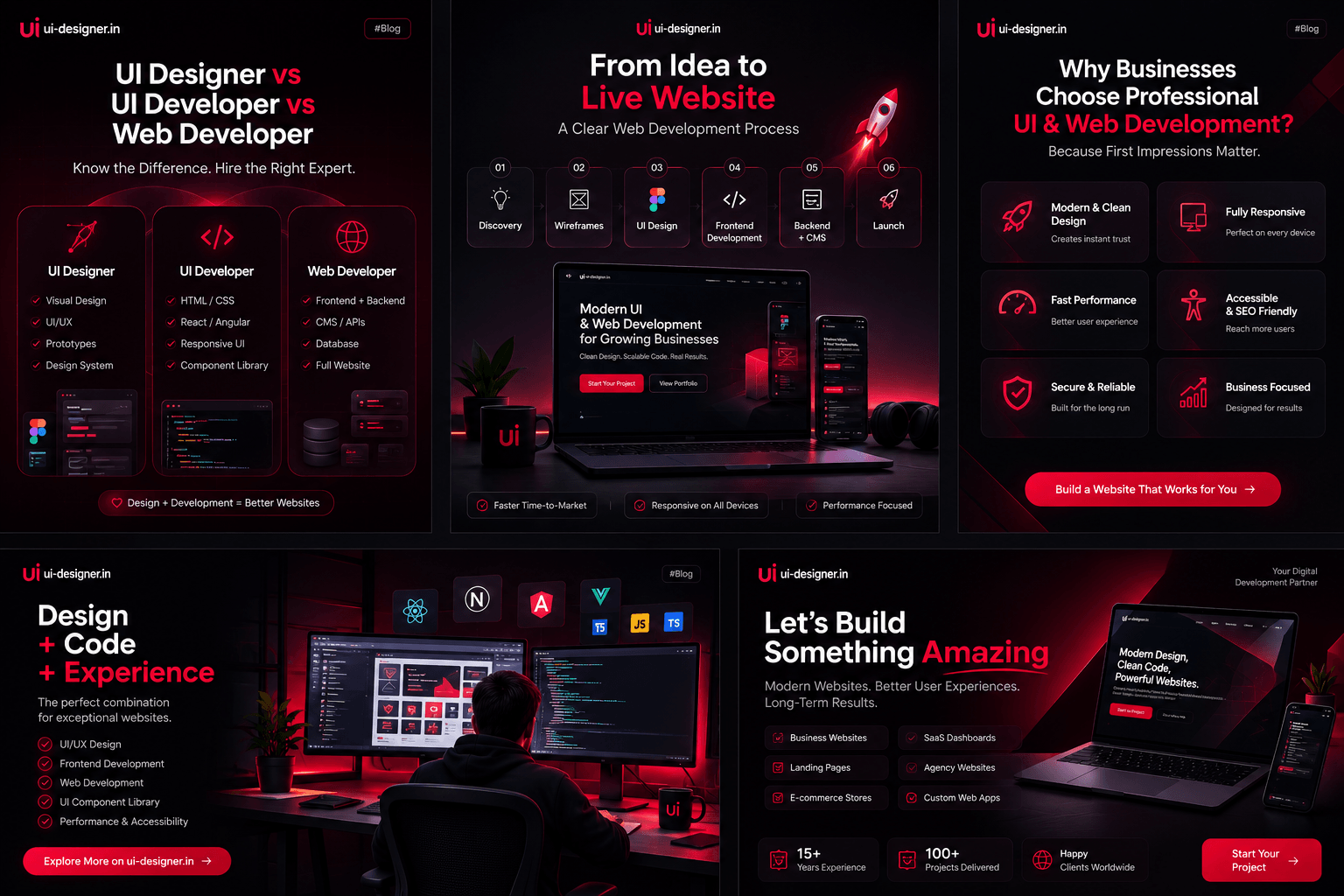
# Best Web Development Company: What "Best" Actually Means for Your Project
There Is No Single "Best" Company
Search "best web development company" and you'll find dozens of lists, awards, and rankings. But the company ranked #1 for enterprise e-commerce may be terrible for your early-stage SaaS MVP. The "best" depends entirely on your context.
This guide helps you evaluate fit—not follow someone else's ranking.
Define Your Project Category First
Before evaluating companies, clarify what you're building:
| Project Type | What You Need | Typical Budget Range | |--------------|---------------|---------------------| | **Marketing / Brochure Site** | Design polish, CMS, SEO, fast load times | $5K–$50K | | **E-commerce** | Payment integration, inventory, checkout UX, security | $25K–$200K+ | | **Web Application / SaaS** | Auth, database, APIs, real-time, scaling, multi-tenancy | $50K–$500K+ | | **Enterprise Platform** | Legacy integration, compliance, role-based access, audit trails | $100K–$1M+ | | **MVP / Startup Product** | Speed to market, iterative architecture, investor-ready | $15K–$100K |
A company excellent at one may lack experience in another.
Evaluation Framework: 6 Dimensions That Matter
1. Technical Competence (Not Just Stack)
Don't just check if they "know React." Look for:
- **Architecture decisions**: Can they explain tradeoffs between SSR/SSG/CSR? Monolith vs microservices? SQL vs NoSQL?
- **Performance culture**: Do they measure and optimize Core Web Vitals? Show me a Lighthouse report from a recent project.
- **Security practices**: OWASP awareness, penetration testing, dependency scanning, secrets management
- **Code quality**: Testing strategy (unit, integration, e2e), CI/CD, code review standards, documentation
2. Design & UX Maturity
Development without design understanding produces usable but frustrating interfaces. Evaluate:
- **In-house design capability** vs. "we work with designers"
- **Design system experience**: Component libraries, design tokens, handoff processes
- **Accessibility**: WCAG compliance as standard, not upsell
- **User research**: Do they validate assumptions with real users?
3. Process & Communication
The best technical team fails with poor process. Assess:
- **Project management**: Agile? Waterfall? Hybrid? Tools (Jira, Linear, Notion)?
- **Transparency**: Regular demos? Access to staging? Real-time progress visibility?
- **Client involvement**: How much input do you have? How are decisions documented?
- **Risk management**: How do they handle delays, scope creep, technical debt?
4. Domain Experience
Industry familiarity reduces ramp-up time and costly mistakes:
- **Fintech**: PCI compliance, audit trails, encryption
- **Healthcare**: HIPAA, FHIR, patient data handling
- **E-commerce**: Checkout optimization, cart abandonment, multi-currency
- **SaaS**: Multi-tenancy, billing integration, feature flags
- **Marketplaces**: Two-sided platforms, trust mechanisms, search/discovery
5. Team Composition & Seniority
Ask specifically: **Who will write my code?**
- Senior developers (5+ years) on critical path features
- Mid-level for well-defined components
- Juniors only with strong mentorship structure
- Dedicated QA? DevOps? Designer? PM?
Beware: Sales team ≠ delivery team. Meet the actual engineers.
6. Post-Launch Partnership
Launch is day one, not the finish line. Clarify:
- **Support tiers**: SLA, response times, escalation paths
- **Maintenance**: Security patches, dependency updates, monitoring
- **Iteration capacity**: Retainer for new features? Hourly? Project-based?
- **Knowledge transfer**: Documentation, code walkthrough, team training
How to Run Your Selection Process
Phase 1: Long List → Shortlist (2–3 weeks)
- **Source candidates**: Referrals, Clutch/GoodFirms, LinkedIn, portfolios
- **Initial filter**: Portfolio relevance, team size, location/timezone, budget alignment
- **Discovery calls (30 min)**: Share high-level brief, assess chemistry, get ballpark
Phase 2: Deep Evaluation (3–4 weeks)
Request from 3–4 shortlisted companies:
- **Detailed proposal**: Approach, timeline, team, tech stack rationale, risks
- **Technical interview**: 60 min with their lead architect/senior dev
- **Reference calls**: 2–3 past clients (ask about challenges, not just praise)
- **Trial engagement** (optional): Paid discovery sprint or technical audit
Phase 3: Decision & Contract (1–2 weeks)
Compare on your weighted criteria, negotiate terms, clarify IP ownership, sign.
Common Mistakes to Avoid
| Mistake | Consequence | Better Approach | |---------|-------------|-----------------| | Choosing lowest bid | Technical debt, missed deadlines, rework | Value-based comparison, not price-only | | Ignoring cultural fit | Miscommunication, frustration, churn | Meet the team, assess communication style | | Over-specifying upfront | Rigid scope, change-order battles | Define outcomes, not just features | | Skipping reference calls | Surprise issues post-contract | Talk to 2+ past clients per finalist | | No exit strategy | Vendor lock-in, redesign-checklist-50-steps" class="internal-link">migration nightmare | Source code ownership, data portability clauses |
Questions That Reveal the Truth
Ask these in technical interviews:
"Tell me about a project where the requirements changed significantly mid-way. How did you handle it?"
"What's the most challenging performance problem you've solved? Walk me through the diagnosis and fix."
"How do you decide between building custom vs. using an existing solution/service?"
"Describe your code review process. What gets rejected?"
"What happens if a critical production bug appears on a Sunday?"
Why Companies Choose ui-designer.in
We're not the biggest agency. We're a focused team of **UI specialists who write production-grade code**. Clients choose us when they need:
- **Design-led development**: Interfaces that convert, not just function
- **Full-stack capability**: From pixel-perfect frontend to scalable backend
- **Performance obsession**: Sub-2s LCP, <100ms INP, <0.1 CLS as baseline
- **Accessibility-first**: Inclusive by default, compliant by design
- **Transparent partnership**: No hidden fees, no lock-in, code you own
- **Long-term thinking**: We maintain what we build
Our sweet spot: **Custom web applications, high-conversion marketing sites, and product interfaces** for businesses that value quality over volume.
---
*Want to see if we're the right fit? [Start a conversation](/contact)—we'll give you an honest assessment, even if that means recommending someone else.*