

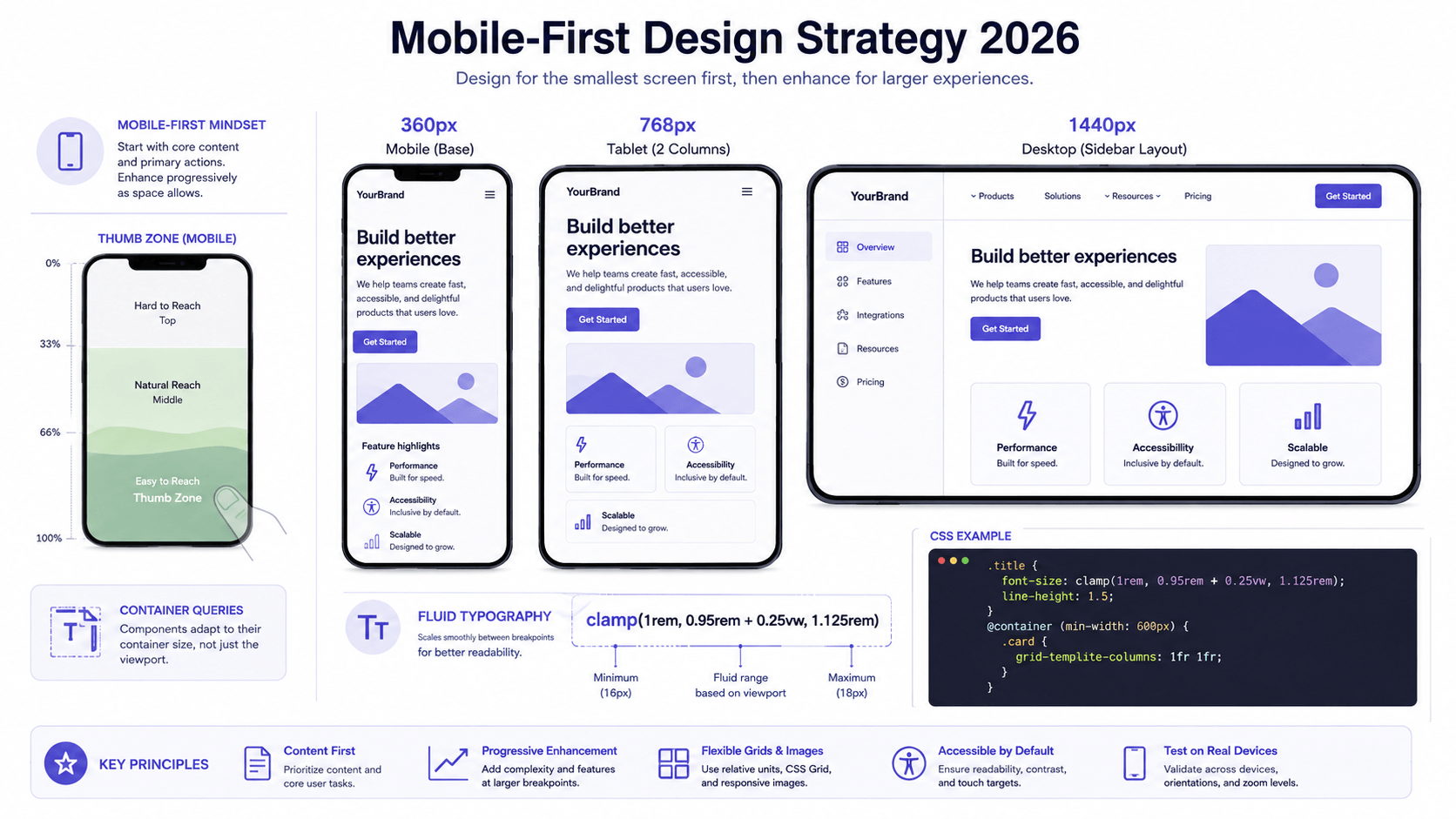
Building a website involves more than writing code. A successful website needs thoughtful design, a strong user experience, clean frontend development, responsive behavior, performance, and ongoing improvements.
That is why choosing between a **UI Designer, UI Developer, and Web Developer** can sometimes be confusing.
The three roles overlap, but each solves a different part of the problem.
UI Designer: Focused on How the Website Looks and Feels
A UI Designer focuses on the visual experience of a website or application.
They work on:
- Layouts and page structure
- Typography
- Colors and visual hierarchy
- Buttons, forms, cards, navigation and other UI elements
- Responsive design concepts
- Design systems
- Figma prototypes and design specifications
- Creating a consistent visual identity
A UI Designer's goal is to make the interface **clear, attractive, intuitive, and consistent**.
If you already have developers but your website looks outdated, inconsistent, or difficult to use, a UI Designer may be what you need.
UI Developer: Where Design Meets Code
A UI Developer takes the approved design and turns it into a working interface.
This role typically involves technologies such as:
- HTML
- CSS / SCSS
- JavaScript
- React
- Angular
- Vue
- Responsive Web Design
- Component-based UI development
- Accessibility
- Cross-browser compatibility
A good UI Developer does more than reproduce a Figma file. They understand spacing, typography, responsive behavior, interaction states, wcag-2026" class="internal-link">accessibility, and react-typescript-2026" class="internal-link">frontend architecture.
If you have a design but need someone to **turn that design into a polished, responsive website**, a UI Developer is often the right choice.
Web Developer: Building the Website Beyond the Interface
A Web Developer can work across a broader range of website functionality.
Depending on their specialization, they may handle:
- Frontend development
- Backend development
- APIs
- Databases
- Authentication
- CMS integration
- E-commerce functionality
- Third-party integrations
- Performance optimization
- Deployment and hosting
For example, an e-commerce website may need product management, payments, customer accounts, orders, APIs, and database functionality in addition to its user interface.
In that situation, you may need a Web Developer or Full-Stack Developer rather than only a UI specialist.
So, Which One Should You Hire?
It depends on what you already have.
| Your requirement | Best fit | | --------------------------------------------------- | ------------------------------------------------------------------------ | | Need a new visual design | UI Designer | | Have Figma designs and need frontend implementation | UI Developer | | Need a complete business website | Web Developer | | Need frontend + backend functionality | Full-Stack Developer | | Existing website looks outdated | UI Designer + UI Developer | | Need a responsive React/Angular/Vue interface | UI Developer | | Need e-commerce functionality | Web Developer / Full-Stack Developer | | Need design + development together | UI Designer + UI Developer, or an experienced developer with both skills |
When One Person Can Handle Multiple Roles
For many business websites, hiring separate specialists for every stage is not always necessary.
An experienced UI Developer or Frontend Developer can often handle:
**Design understanding → UI implementation → Responsive development → wcag-2026" class="internal-link">Accessibility → Performance**
This can make the development process faster because the person implementing the interface understands both design and code.
For larger products, however, having dedicated designers and developers can provide deeper specialization.
What Should You Look for When Hiring?
Don't choose a developer only because they list many technologies on their profile.
Look for evidence of real work.
1. Portfolio
Look at websites they have actually designed or developed.
2. Responsive expertise
The website should work well across desktop, tablet, and mobile—not simply shrink the desktop layout.
3. Accessibility
A professional website should consider wcag-2026" class="internal-link">accessibility-checklist-wcag-2026" class="internal-link">keyboard navigation, semantic HTML, readable typography, focus states, color wcag-2026" class="internal-link">contrast, and assistive technologies.
4. Performance
Good UI should not come at the cost of a slow website.
5. Clean frontend implementation
For modern websites, reusable components, maintainable CSS, semantic markup, and sensible react-typescript-2026" class="internal-link">frontend architecture matter.
6. Understanding of business goals
The best website isn't necessarily the one with the most visual effects.
It should help users understand the business, find information, trust the company, and take the intended action.
Design + Development Is Often the Real Requirement
Many businesses initially search for a **"website developer"** when what they actually need is a combination of design and development.
A beautiful design without solid implementation can become difficult to maintain.
Likewise, technically excellent development with poor UX can result in a website that works but doesn't communicate effectively.
The strongest websites bring both disciplines together:
**Good UX → Strong UI → Clean frontend → Fast performance → Accessible experience → Business results**
Final Thoughts
There is no universally "best" role to hire.
If you need visual direction, start with a **UI Designer**.
If you already have designs and need them converted into a responsive interface, choose a **UI Developer**.
If you need a complete website with functionality, integrations, CMS, e-commerce, or backend systems, look for a **Web Developer or Full-Stack Developer**.
And if you want one team or professional to take your website from design through development, look for someone who understands both **UI design and modern web development**.
At **ui-designer.in**, the focus is on creating modern digital experiences that combine thoughtful UI, responsive frontend development, and practical web development—so design and technology work together rather than separately.