

As web applications grow in complexity and cross-functional team sizes expand, monolithic frontend architectures frequently become operational bottlenecks. Deployments stall, build times skyrocket, merge conflicts proliferate, and a single bug in a secondary module risks bringing down the entire platform.
**Micro-react-typescript-2026" class="internal-link">Frontend Architecture** addresses these scaling challenges by decomposing large frontend web applications into autonomous, independently deployable micro-apps.
---
1. What is Micro-Frontend Architecture?
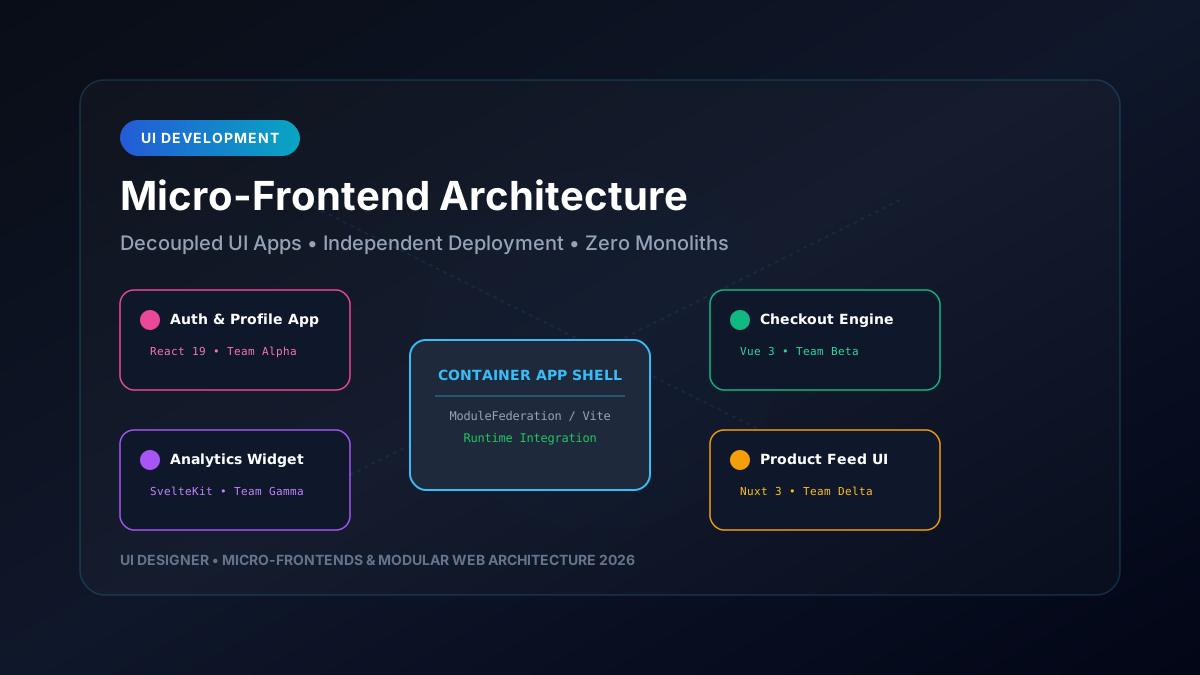
Similar to backend microservices, micro-frontends break down monolithic client applications into semi-independent web apps owned by separate engineering squads. Each micro-app manages its own domain components, business logic, routing sub-paths, and API data fetching.
┌─────────────────────────────────────────────────────────────────────────────┐
│                       MICRO-FRONTEND CONTAINER ARCHITECTURE                 │
├─────────────────────────────────────────────────────────────────────────────┤
│                                                                             │
│                  ┌──────────────────────────────────────┐                   │
│                  │       HOST CONTAINER APP SHELL       │                   │
│                  │  (Global Auth, Router, State Sync)   │                   │
│                  └──────────────────┬───────────────────┘                   │
│                                     │                                       │
│       ┌─────────────────────────────┼─────────────────────────────┐         │
│       │                             │                             │         │
│       ▼                             ▼                             ▼         │
│ ┌───────────┐                 ┌───────────┐                 ┌───────────┐   │
│ │ AUTH APP  │                 │ CHECKOUT  │                 │ ANALYTICS │   │
│ │ (React 19)│                 │  (Vue 3)  │                 │ (Svelte)  │   │
│ └───────────┘                 └───────────┘                 └───────────┘   │
│                                                                             │
└─────────────────────────────────────────────────────────────────────────────┘
---
2. Core Architectural Approaches
- **Build-Time Integration (NPM Packages)**: Micro-frontends published as separate npm packages and compiled during the host app build. *Drawback: Requires rebuilding the host container for every micro-app update.*
- **Server-Side Transclusion (Edge SSI / Tailor)**: Server or edge proxies stitch HTML fragments together before sending the page to the browser.
- **Runtime Integration via Module Federation (Recommended)**: Webpack 5 / Vite Module Federation dynamically fetches remote JavaScript bundles over the wire at runtime.
---
3. Implementing Module Federation with Vite / Webpack
Host Container Config (`vite.config.ts`):
import { defineConfig } from 'vite';
import federation from '@originjs/vite-plugin-federation';
export default defineConfig({ plugins: [ federation({ name: 'host-app', remotes: { checkoutApp: 'http://localhost:5001/assets/remoteEntry.js', analyticsApp: 'http://localhost:5002/assets/remoteEntry.js', }, shared: ['react', 'react-dom'], }), ], });
Remote Micro-App Config (`vite.config.ts`):
import { defineConfig } from 'vite';
import federation from '@originjs/vite-plugin-federation';
export default defineConfig({ plugins: [ federation({ name: 'checkoutApp', filename: 'remoteEntry.js', exposes: { './CheckoutWidget': './src/components/CheckoutWidget.tsx', }, shared: ['react', 'react-dom'], }), ], });
---
4. Cross-Micro-App Communication Strategies
To prevent tight coupling between micro-frontends, communication between modules should follow event-driven patterns:
- **Browser Custom Events (EventBus)**:
  // Micro-App A dispatches an event
  window.dispatchEvent(new CustomEvent('cart:item-added', { detail: { itemId: '1029' } }));
// Micro-App B listens to the event window.addEventListener('cart:item-added', (e: any) => { console.log('Cart updated:', e.detail); });
- **Global Reactive Store (Zustand / RxJS)**: Lightweight shared state container passed down from the Host App Shell.
---
5. Architectural Benefits for Scaling Enterprise Engineering
- **Autonomous Squad Deployments**: Team Checkout can deploy 10 times a day without running full regression builds on Team User Management.
- **Fault Isolation & Error Boundaries**: Wrap remote micro-apps in React Error Boundaries or Vue error hooks so that if a remote widget fails, the parent application remains fully functional.
- **Polyglot Flexibility**: Allows legacy application modules (e.g., Vue 2 or Angular) to run side-by-side with modern React 19 or Svelte 5 micro-apps during migration phases.
Micro-react-typescript-2026" class="internal-link">frontend architecture provides the organizational scaling and technical decoupling required for large enterprise software teams to maintain high developer velocity.