

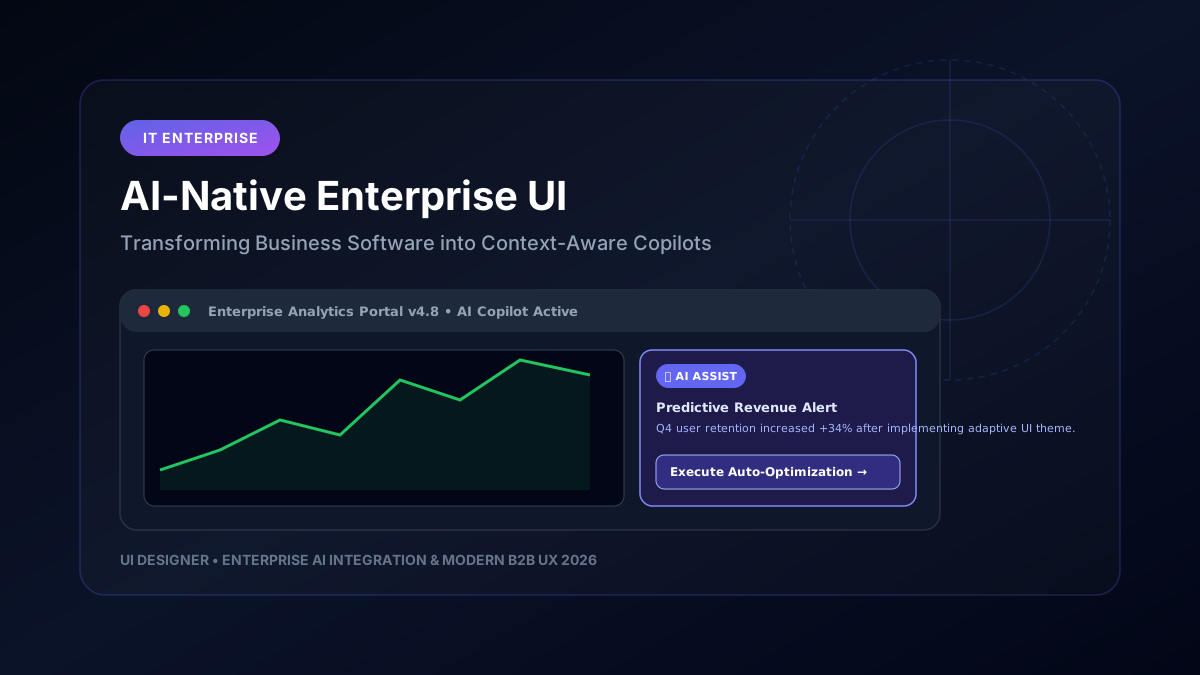
Enterprise B2B software has traditionally suffered from bloated dashboards, complex multi-level menu navigation, and steep onboarding curves for operational teams. In 2026, leading IT companies are revolutionizing enterprise software by shifting from static, command-driven UIs to adaptive, **AI-Native User Experiences**.
---
1. The Paradigm Shift: Command-Driven vs Intent-Driven UI
In traditional enterprise applications, users must navigate hierarchical trees, open multiple browser tabs, and manually key in queries across separate screens. AI-Native user interfaces invert this dynamic: users state their operational intent in natural language or context-aware actions, and the UI dynamically constructs the appropriate view and action pipeline.
TRADITIONAL UI FLOW:
[User] ──► Navigate Menu ──► Apply 6 Filters ──► Export CSV ──► Manual Spreadsheet Calc
AI-NATIVE INTENT FLOW: [User Prompt: "Show Q3 accounts at risk of churn with >5 open tickets"] │ ▼ [AI Copilot Core] ──► Generates Interactive React Grid + Predictive Risk Badges
---
2. Core Components of AI-Native Enterprise Software
┌─────────────────────────────────────────────────────────────────────────────┐
│                      AI-NATIVE ENTERPRISE UI STACK                          │
├─────────────────────────────────────────────────────────────────────────────┤
│                                                                             │
│  1. EMBEDDED CONTEXT CO-PILOT LAYER                                         │
│     • Conversational Assistant grounded in active workspace DOM context     │
│     • Multimodal inputs (Voice, Text, Drag & Drop Files)                    │
│                                                                             │
│  2. GENERATIVE INTERFACE RENDERER                                           │
│     • Generates server-driven UI components on-the-fly                      │
│     • Uses JSON Schema & UI Token System for brand consistency              │
│                                                                             │
│  3. PREDICTIVE WORKFLOW ENGINES                                             │
│     • Proactive anomaly alerts (e.g., "Revenue drop detected in Region 4")  │
│     • Auto-fills complex enterprise forms based on historical data          │
│                                                                             │
└─────────────────────────────────────────────────────────────────────────────┘
---
3. Designing Generative UI Components with JSON Schema
To ensure that AI-generated UI components remain visually consistent with corporate design systems, AI models output structured JSON component schemas rather than raw un-styled HTML.
AI Model Schema Output:
{
  "component": "WidgetCard",
  "props": {
    "title": "Churn Risk Warning",
    "severity": "high",
    "metrics": [
      { "label": "Affected Accounts", "value": "14" },
      { "label": "ARR Impact", "value": "$420,000" }
    ],
    "action": {
      "label": "Initiate Retention Playbook",
      "event": "TRIGGER_RETENTION_WORKFLOW"
    }
  }
}
Component Renderer (React):
import React from 'react';
import { Badge, Button, Card } from '@enterprise/design-system';
export const DynamicAIWidget: React.FC<{ schema: any }> = ({ schema }) => { const { props } = schema; return ( {m.value}{props.title}
---
4. Operational ROI for Enterprise IT Leaders
- **80% Faster Employee Onboarding**: New operations staff perform complex enterprise workflows immediately without extensive training software manuals.
- **Higher Feature Utilization**: Uncovers deep SaaS product capabilities through natural language discovery.
- **Proactive Anomaly Mitigation**: Machine learning highlights operational risks before they escalate into high-severity outages or revenue leaks.
Integrating AI natively into enterprise software is no longer a gimmick—it is reshaping how B2B software creates economic value.